






If you have browsed professional forums recently, you have undoubtedly encountered the provocative question: “Is digital marketing dead?” The answer is a resounding no, but the landscape as we knew it is unrecognizable. Strategies that worked seamlessly just a few years ago—basic keyword stuffing, generic email blasts, and cookie-dependent ad targeting—have reached their expiration date. What is dying is the era of lazy marketing. In its place, a sophisticated, highly personalized ecosystem has emerged. According to WordStream, the global digital advertising market is estimated to reach $786.2 billion by 2026, driven by a 9% compound annual growth rate. This proves businesses are aggressively reallocating budgets toward dynamic strategies. Thriving in 2026 requires understanding artificial intelligence, search intent, omnichannel integration, and the human element. Digital marketing has merely grown up.
The AI Takeover: From Existential Threat to Foundational Utility
Artificial Intelligence has transitioned from a buzzy novelty to the core operating system of modern marketing teams. The anxiety surrounding AI replacing marketers has given way to reality: marketers who leverage AI will replace those who do not. A recent report highlights that 92% of businesses plan to invest heavily in generative AI tools, while the ‘AI in marketing’ market is projected to grow at a 26.7% CAGR by 2034, as noted by the Digital Marketing Institute. Instead of merely automating administrative tasks, marketers are deploying agentic AI capable of executing complex workflows. In fact, 59% of global marketers identify AI for campaign personalization as the most impactful trend, according to Nielsen. Furthermore, Gartner predicts that by 2028, 60% of brands will use agentic AI to deliver autonomous customer interactions, functioning as digital concierges, as reported by Webandcrafts. The modern marketer orchestrates these tools to predict behaviors, optimize ad spend, and scale personalized content production.
Search Everywhere Optimization (SEO 2.0) and the Zero-Click Landscape
For over a decade, SEO meant targeting high-volume keywords, acquiring backlinks, and awaiting organic traffic. Today, the integration of AI Overviews and generative search experiences has fundamentally altered how users discover information. We have entered the era of the zero-click search, where AI platforms summarize answers directly on the results page. This paradigm shift has caused widespread panic, yet organic search remains a critical driver of high-intent traffic. Data shows that 40.65% of website traffic still stems from traditional organic search, compared to 0.26% from direct AI referral traffic, as cited by Forge Apollo. However, marketers who have noticed drops in search volume note that their AI-driven traffic exhibits significantly higher purchase intent. To thrive in 2026, brands are pivoting to Search Everywhere Optimization (SEO 2.0). Users are no longer exclusively searching on Google; they ask voice assistants, query TikTok, and converse with chatbots. Marketers must optimize for these multi-modal discovery engines by producing expert-led content that AI engines trust enough to cite.
The Shift Toward Social Search and Short-Form Video Dominance
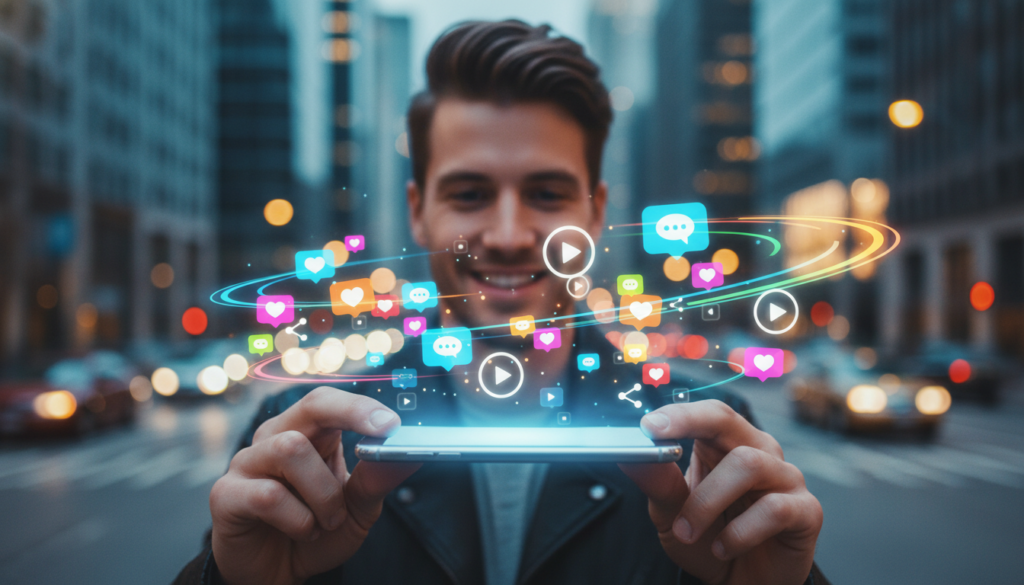
Social media platforms are no longer just passive networks; they have forcefully evolved into primary search engines. Gen Z and Gen Alpha consumers increasingly bypass traditional search engines entirely, turning to TikTok, Instagram, and YouTube to find authentic product reviews and visual educational tutorials. This monumental shift has given rise to the social SEO phenomenon, where optimizing video captions, strategic hashtags, and on-screen text is essential for discovery. Video content, particularly short-form video, continues its absolute dominance across the ecosystem. According to industry reports highlighted by WordStream, 92% of businesses now consider video marketing to be a non-negotiable component of their strategy. The format is rapidly evolving beyond simple entertainment. We are seeing an exponential increase in immersive formats, shoppable media integration, and interactive video experiences that compress the traditional sales funnel. These advanced integrations allow consumers to seamlessly transition from initial product discovery to final purchase without ever leaving the host application.
The Privacy-First Era and the Absolute Necessity of Zero-Party Data
One of the most irreversible disruptions in the digital space is the global shift toward privacy-first data architectures. The definitive deprecation of third-party cookies, combined with increasingly stringent data protection regulations worldwide, has forced marketers to rethink how they track consumer behavior. Relying on opaque, third-party data brokers is no longer an ethical or compliant strategy in 2026. Instead, the ultimate competitive advantage now belongs to brands that successfully build robust first-party and zero-party data foundations. Consumers are willing to share their personal information only in exchange for genuine value, such as exclusive product discounts or highly personalized recommendations. This value exchange requires fully transparent consent management systems and sophisticated Customer Data Platforms (CDPs). The financial impact of mastering this transition is striking. Companies executing strong omnichannel strategies boast an 89% customer retention rate, compared to 33% for those with weak channel alignment, as highlighted by Webandcrafts. Utilizing privacy-compliant data to maximize customer lifetime value is now a business survival imperative.
The Resurgence of Owned Channels: Why Email Marketing Still Reigns Supreme
With social media algorithms changing without warning and search engines serving unpredictable AI summaries, marketers have realized the inherent danger of building their digital house on rented land. As a result, there has been a strategic resurgence in the prioritization of owned media channels, most notably email marketing. Despite countless industry predictions of its imminent demise, email definitively remains a high-ROI channel. In 2026, roughly 75% of forward-thinking marketers have either maintained or increased their email marketing investment, according to data from Forge Apollo. However, the nature of email marketing has matured significantly. The archaic days of generic promotional newsletters are over. Modern, high-converting email strategies rely heavily on predictive analytics to deliver hyper-personalized content exactly when a user is likely to convert. The average open rate for automated email flows currently stands at an impressive 48.75%. By utilizing zero-party data to craft bespoke email journeys, brands foster long-lasting loyalty and drive predictable revenue.

Human Empathy and Creativity: The Ultimate Unfair Advantage
As the digital marketing landscape becomes increasingly automated, the true unassailable differentiator for successful brands in 2026 is raw human empathy. When every competing company has frictionless access to the exact same AI tools and predictive analytics, technology ceases to be a sustainable competitive moat. What cannot be automated is genuine human connection, cultural understanding, and emotionally resonant creative risk-taking. Modern consumers are ruthlessly bombarded with synthetic, AI-generated content daily. Consequently, they have developed a highly tuned radar for corporate inauthenticity. Brands that lean too heavily on artificial intelligence to mass-produce generic content will find themselves actively ignored by an apathetic audience. The most successful marketing campaigns intelligently leverage AI for deep audience research and workflow efficiency, but rely entirely on human intuition to craft the narrative. Marketers must focus intensely on authentic storytelling, actively building communities around shared core values, and adopting trust-first tactics. Leaning heavily into humanity is the irreplaceable strategy to cut through the deafening digital noise.
Conclusion: The Golden Age of Digital Marketing Is Just Beginning
Is digital marketing dead? Absolutely not. However, the foundational definition of what it actually means to be a digital marketer has fundamentally transformed. The industry has shed its outdated reliance on manipulative algorithmic hacks and vanity metrics, evolving into a sophisticated discipline that seamlessly marries cutting-edge technology with deep psychological insights. The explosive growth of AI, the rapid evolution of multi-modal search, the rise of social commerce, and the shift toward privacy-first data architectures are not ominous signs of a dying industry. They are vital indicators of a vibrant, maturing, and incredibly lucrative one. With global digital advertising projected to surpass three-quarters of a trillion dollars by 2026, the potential financial opportunities for adaptable brands are limitless. Marketers who stubbornly cling to outdated tactics will undoubtedly feel the industry is dead. But for those willing to embrace new AI-driven tools and champion authentic human creativity, the true golden age of digital marketing is just beginning.